Garry Kapoor
Senior UX Leader, Connected Buildings
A reimagining of how facility managers, engineers, and operations leaders understand the buildings they're responsible for. She doesn't read the building anymore. She walks through it.
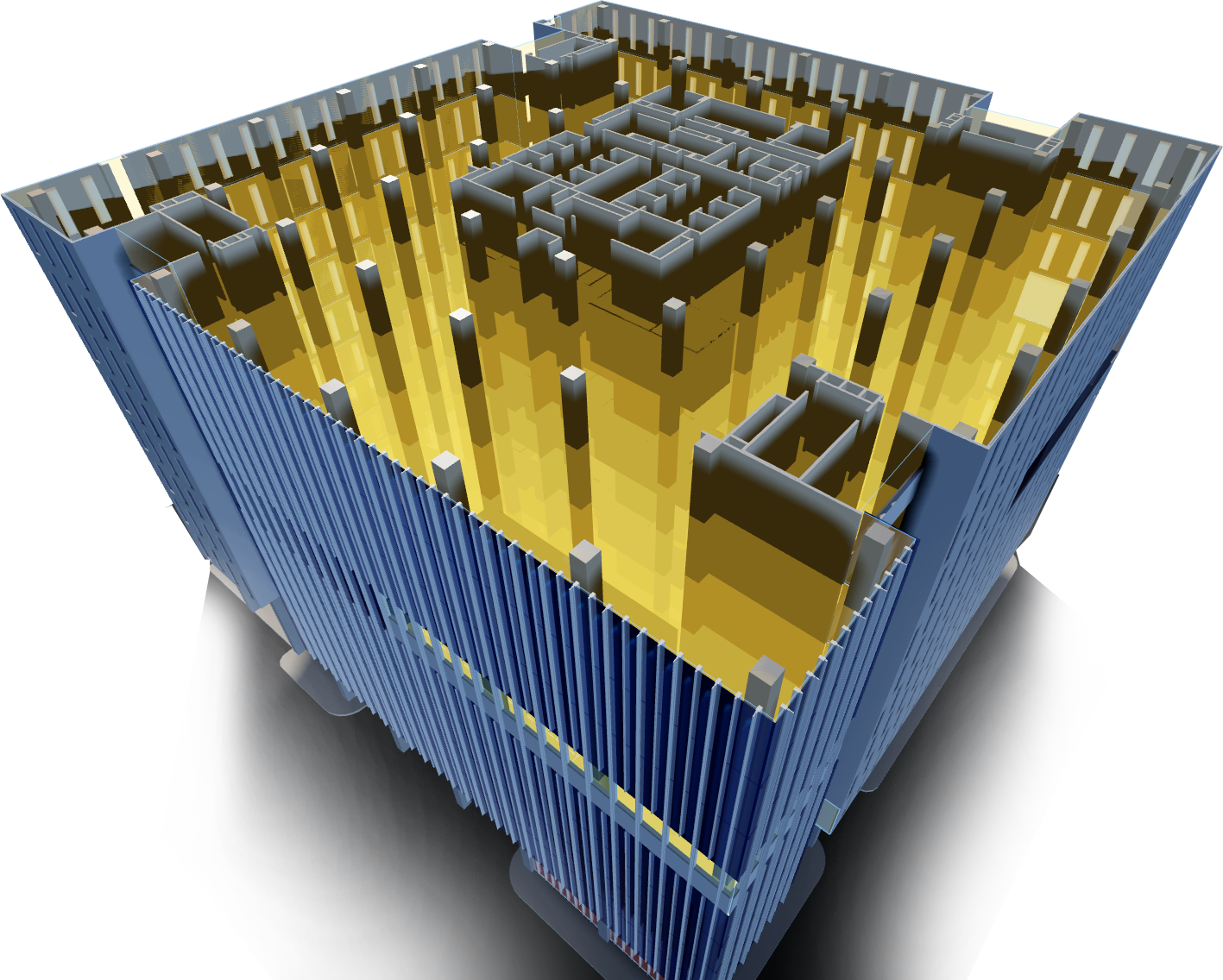
Forty-two years old. Fifteen years managing building systems. She knows her building the way a musician knows their instrument — which AHU runs hot in August, which alarm at 2am is the one that means get out of bed. What she could not do — what the tools never let her do — was see her building. Not the floor plan. Not the schematic. The building as it actually behaved.
She was not the only one carrying it. The Building Engineer spent 20 minutes answering a question that should have taken 20 seconds, because the answer lived in three systems and required memorized asset IDs. The Operations Manager spent more time explaining the data than showing the insight. Three roles, three versions of the same weight: the building was a thing that demanded to be decoded before it could be managed.
The brief was a dashboard. A better one — clearer KPIs, faster navigation. That was the 100K: real, deliverable, defensible in a sprint review. But the brief was not the real question. The real question was the one Sarah asked without asking it, every time she opened the tools at 2am: "Why am I being made to decode a building I already know?"
A better dashboard would have answered the brief. It would not have answered her question. That gap was the 600K — what this project actually controlled if the vision held all the way through:
Sarah stops decoding her building and starts navigating it.
The engineer's expertise lives in the work instead of disappearing under it.
The operations manager walks into the briefing carrying a narrative.
The building stops being tolerated and becomes something the team has a relationship with.
Interviews, on-site observation, and workflow mapping with facility managers, engineers, and operations leaders across multiple buildings. The patterns were consistent enough that they became one diagnosis:
To reach a single insight.
Open simultaneously to answer one question.
Because the system that named them didn't help you find them.
Every week, because the data lived in places that did not speak to each other.
But the biggest insight was the one that changed the project: users weren't struggling because they lacked data. They were struggling because the data wasn't connected to the real, physical space they worked in.
When I brought the 600K version to the room, the resistance wasn't disagreement — they couldn't see it. The 3D, spatial, conversational version of building management existed only in imagination. Every design project has a 0% period: the kickoff. The budget is approved, the whiteboard is blank, everyone nods. Then pressure arrives, and someone reasonable puts the schematic on the table. Let's just ship the dashboard.
I held this one through building, not through argument. Every iteration moved the invisible picture one step closer to visible. The rebellion was not in refusing to do the assigned work. It was refusing to let the assigned work be a dead end.
Show data where it lives — in rooms, on floors, inside the asset itself.
If Sarah can describe it in one sentence, the system should answer in one.
Building → floor → room → asset. The depth waits for the user.
Surface the unusual before it becomes an emergency — to the person who can act.
The screen is a window into the building, never the thing being managed.
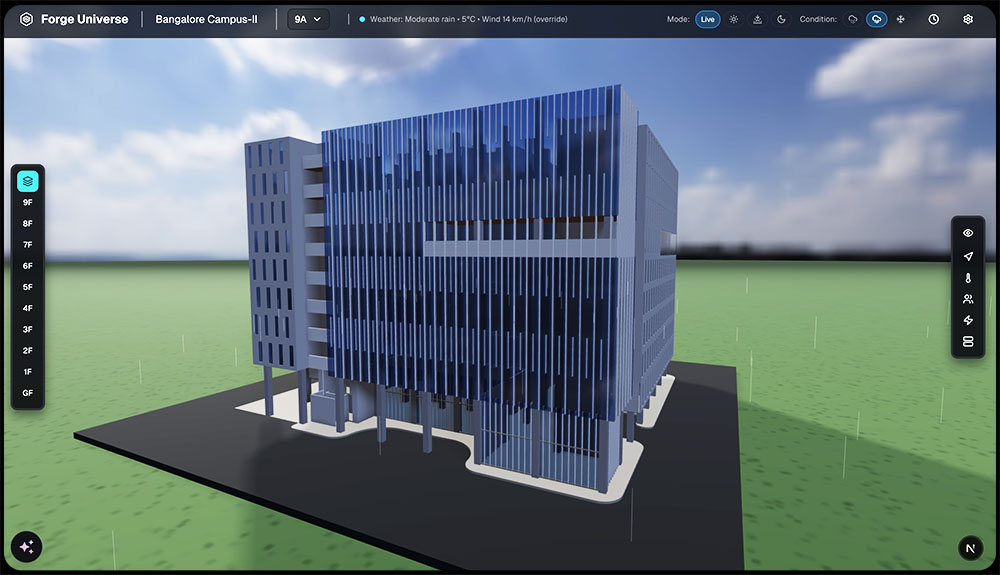
The campus, alive. Energy performance overlays the structure itself, so anomalies are visible before they're named.
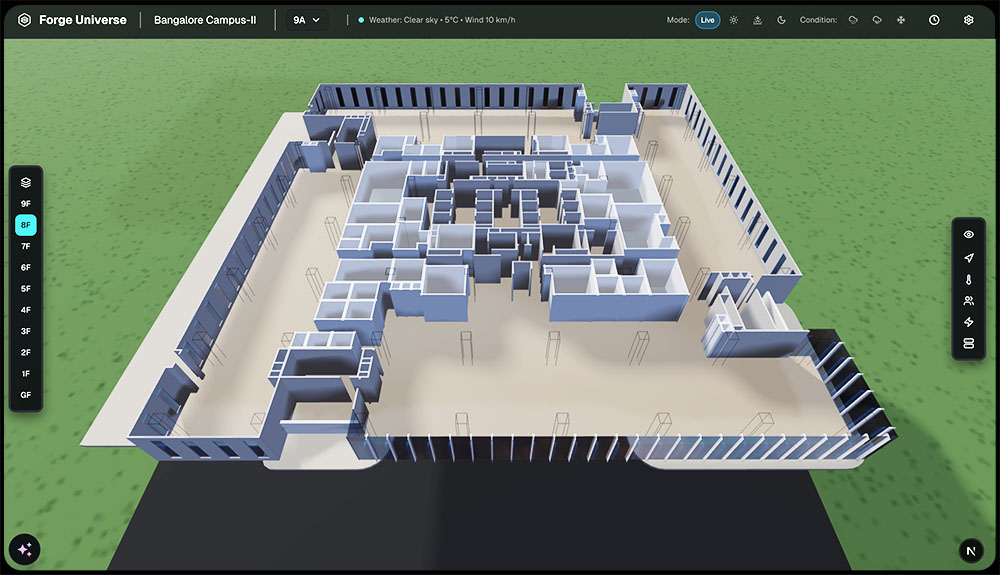
Floor 8, identified in seconds. The high-consumption area appears as a hot zone the moment she opens the floor. The data is a place now.
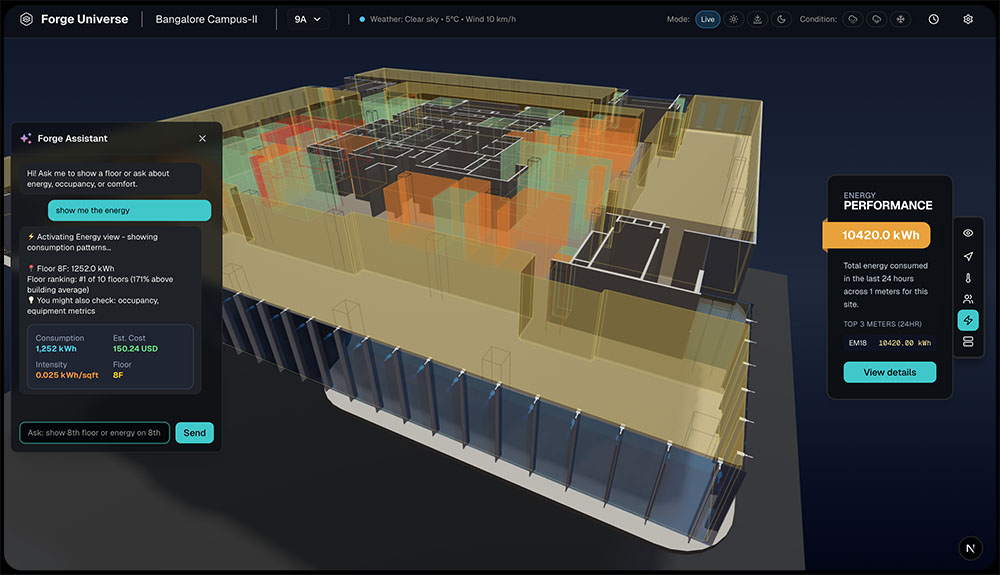
Ask in English. "How many VAVs in the executive offices?" The system finds the assets and answers in Sarah's language.
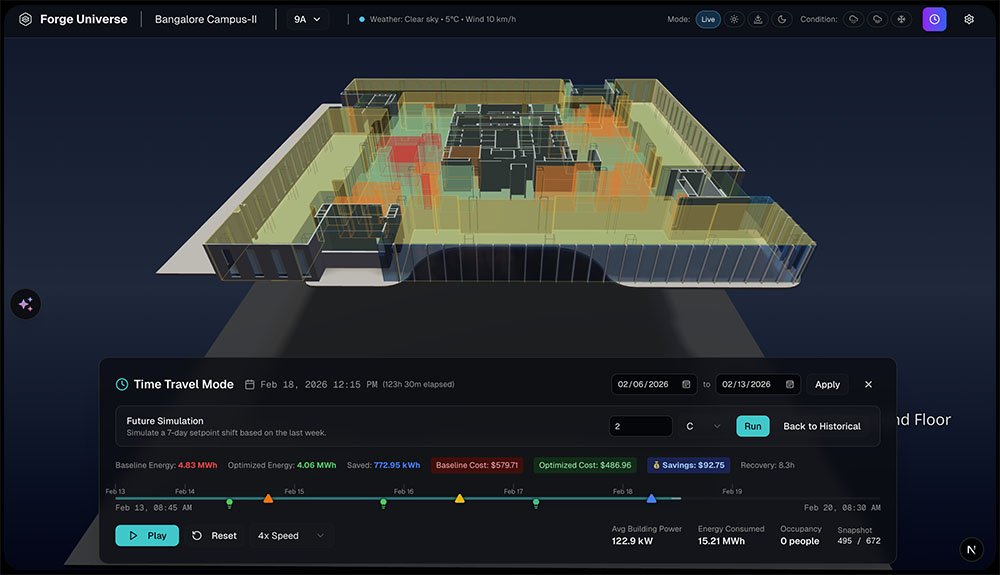
What happens if? Model a setpoint change or equipment failure and watch the building respond — before touching the real one.
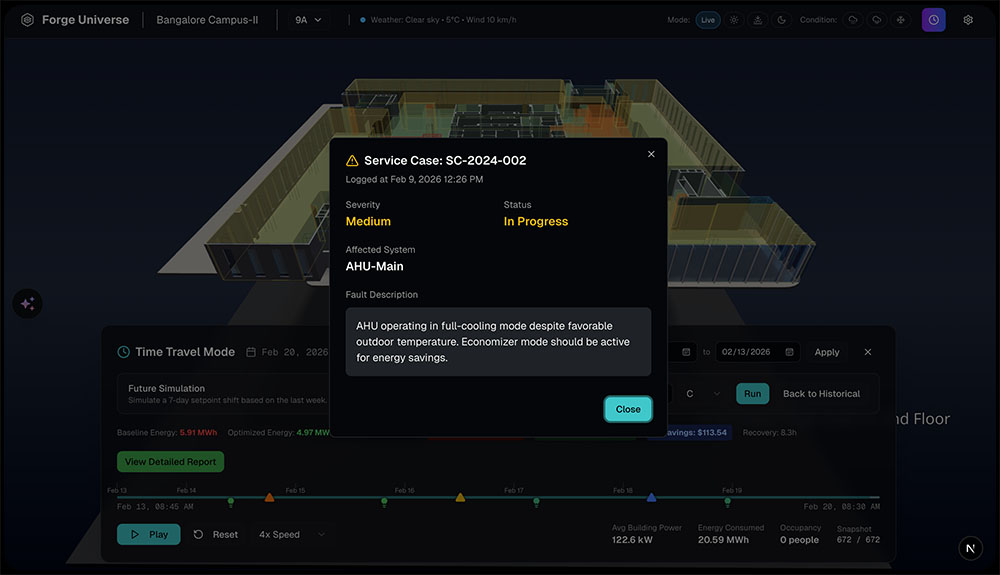
Anomaly to action. The system surfaces issues to the right person first — in an order that protects their work and judgment.
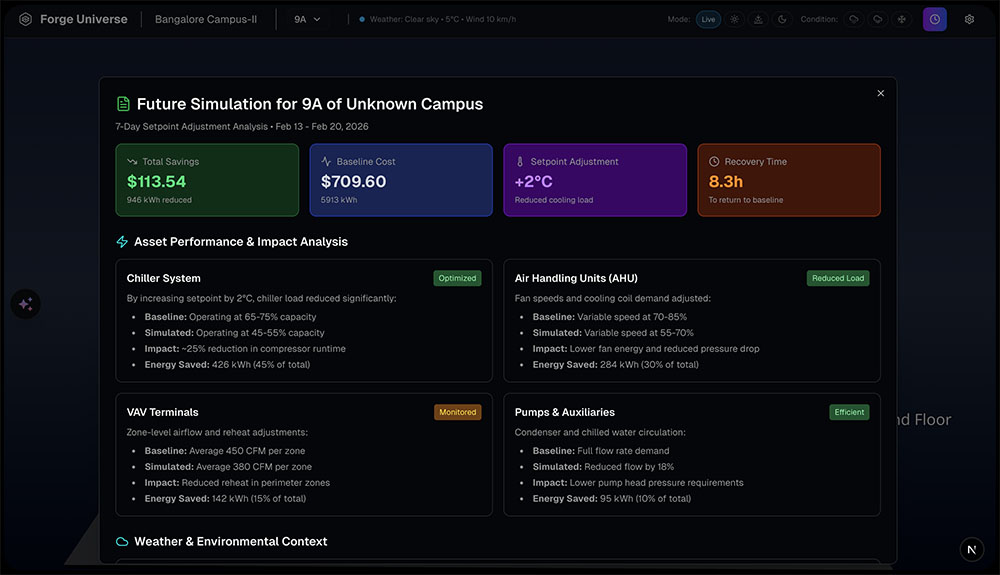
The story, ready for the room. The briefing is already there — a narrative the executive reads, the engineer defends, the operator recognizes.
We put the Digital Twin in front of Sarah for the first time. She moved through the virtual building, saw the anomaly before it surfaced as an alert, ran the simulation, went quiet — and said: "This is what I always needed. I just didn't know it existed."
The 600K is never the bigger version of the 100K. It is a different question altogether — one the brief was never written to ask. The job is to make the 600K visible from the first sprint, so every decision downstream points toward the version of the product the user will recognize as the one they always needed.